Advanced Psoriasis Treatment
At Cahaba Dermatology, we are one of the few treatment centers for psoriasis in Alabama and offer many therapeutic options for psoriasis from NB-UVB light therapy and PHAROS excimer treatment to oral, topical and injectable treatments. We offer NB-UVB for psoriasis and vitiligo treatment. We are experts at treating psoriasis and will help you find the right treatment regimen for you.
Frequently Asked Questions
Psoriasis is a common, chronic, scaly rash that affects people of all ages. There is a genetic predisposition to psoriasis, thus it tends to run in families. Psoriasis is also influenced by many environmental factors. It is not contagious and is not due to an allergy.
The most common ages for psoriasis to first appear are in the late teens and in the 50s. It affects men and women equally, although in children, girls are more commonly affected than boys.
Psoriasis is often so mild it is barely noticed by the affected person, but it can occasionally so severe that the patient must be admitted to hospital for treatment. It may or may not be itchy.
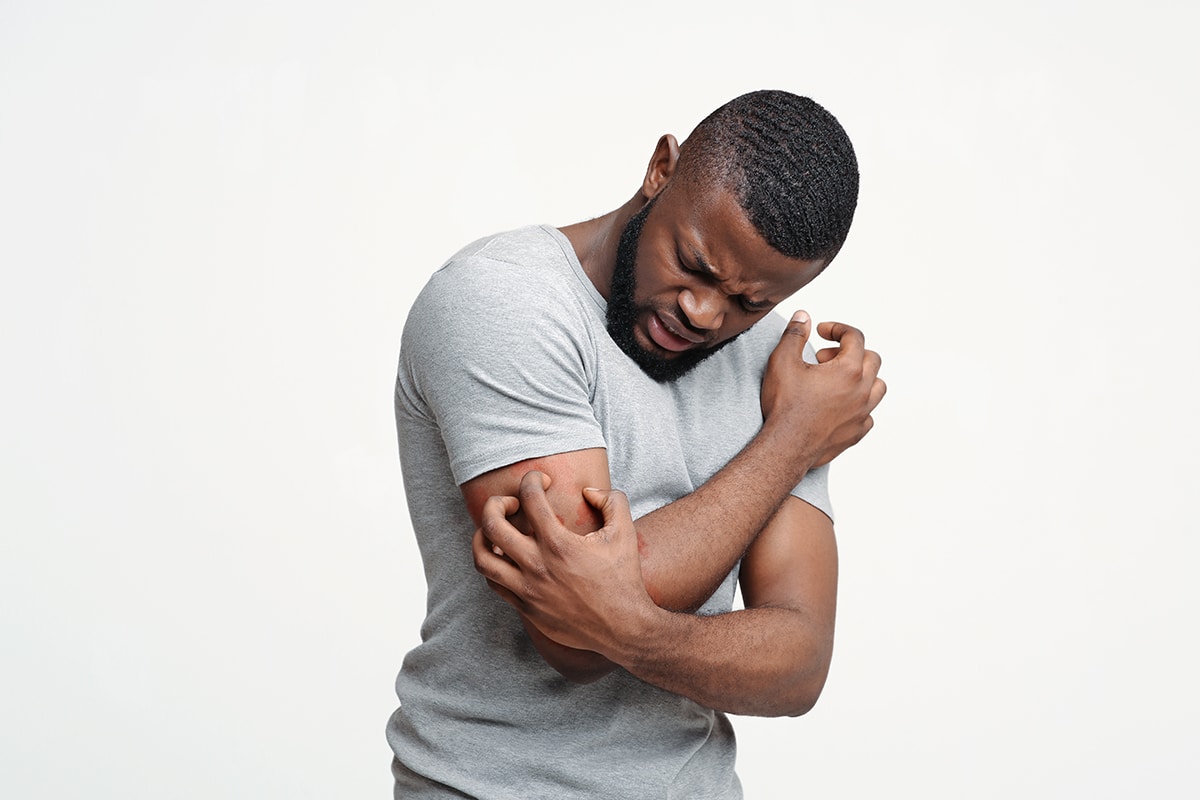
Plaque psoriasis, or psoriasis vulgaris, appears as raised red rash (plaques) on the skin. Often, the rash has an appearance of white or slivery scale. Knees and elbows are common places for it to occur. The patches can itch and vary in size. Sometimes nails may become brittle, discolored and lift off the nail bed.
Guttate psoriasis involves small, red spots on the arms and legs, but can appear anywhere, and may clear up on its own. Sometimes it occurs after an illness.
Pustular psoriasis is a type which causes pus-filled bumps on the foot or hand, palms or soles. If these bumps appear all over the body, get the person to a hospital as soon as possible.
Inverse psoriasis, sometimes called flexural or intertriginous psoriasis, is smooth red patches of skin which appear raw, where skin touches skin such as the pelvic region or the armpits. Skin is sore to the touch.
Inverse psoriasis, sometimes called flexural or intertriginous psoriasis, is smooth red patches of skin which appear raw, where skin touches skin such as the pelvic region or the armpits. Skin is sore to the touch.
Erythrodermic psoriasis, sometimes called exfoliative psoriasis, makes skin look as if it’s burned. Most skin on the body turns bright red and cannot maintain its normal temperature. Quick heartbeat, along with intense pain and itching can occur, and anyone affected should seek treatment right away.
Psoriasis is common. Roughly 7.5 million people in the USA have this condition, and 4/5ths have plaque psoriasis. It can occur at any age, but most get it between 15 and 30 years old. It is also not unusual for it to start between 50 and 60 years of age. Caucasians get psoriasis more often. Most likely to get inverse and guttate psoriasis are young children and infants. Psoriasis is not contagious–you can’t get it from another person.
A person’s genetics and immune system play roles in the disease, and not everyone with the genes associated with the disease will get it. Sometimes it must be triggered, and many say their disease began after a stressful even, illness, certain medications, cold and dry weather, a skin injury, or even a bad sunburn.
Our doctors will examine your skin, nails and scalp for signs of the disease. You will also be asked about family history of psoriasis, recent illness or new medications. A skin biopsy may be part of the procedure, to help confirm the diagnosis. Treatment can reduce the effects of the disease, and sometimes clear it completely. We have a comprehensive approach to treatment of psoriasis.