

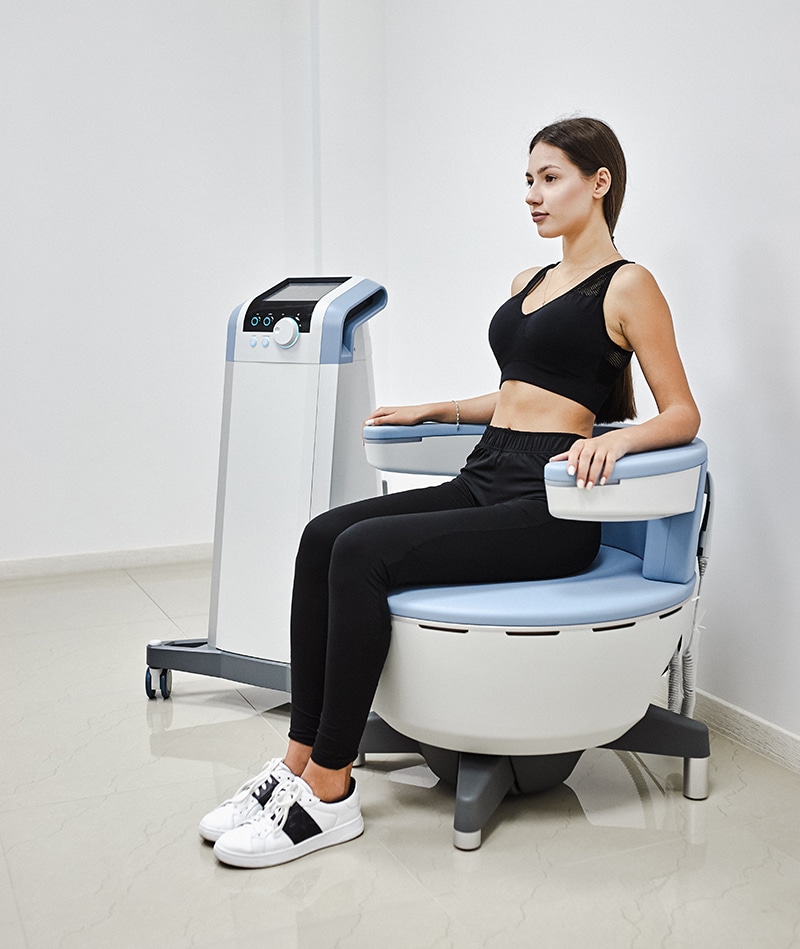
Advanced Emsella® Therapy for Pelvic Floor Strength
Incontinence can happen after pregnancy, as a result of normal aging, or by some other factor, but no matter the cause, its effects keep you from being fully present in your life. If you’re constantly having to slip out to use the restroom, or if you’re worried about the possibility of leaks, your daily activities and relationships can suffer. That’s where Emsella® comes in.
Eliminate Incontinence & Improve Your Pelvic Floor
Emsella® is the quickest, safest, and most effective treatment for urinary incontinence. It requires no preparation, and it’s FDA approved for treatment of men and women of all ages.
Prepared to give urinary incontinence the boot?

The Symptoms of Urinary Incontinence
Incontinence, the involuntary leakage of urine or the sudden and often urgent need to use the restroom, is more common in women than in men. Symptoms can range from occasional, minor leaks to more frequent or noticeable episodes that interfere with daily activities. The severity and pattern of symptoms often depend on what is causing the bladder to lose control.
Because urinary incontinence is not the same for everyone, understanding the different types can provide helpful insight into what you may be experiencing. Each type presents in its own way and may be triggered by different situations or underlying factors. The sections below outline the most common forms of urinary incontinence and how they typically present.
Types of Urinary Incontinence
Stress incontinence is characterized by a sudden leakage caused by sneezing, coughing, laughing, or otherwise causing pressure to the bladder.
Overflow incontinence is when you have a sudden, intense urge to urinate, followed by the involuntary release of urine.
Functional incontinence happens when a physical or mental impairment prevents you from reaching the toilet in time.
Mixed incontinence is when you experience more than one of the above types of incontinence.